
Welcome to the group website for the Quantum Collective Dynamics in Light-Matter Systems group. We are a research group based in the Physics and Astronomy department at University College London, led by our principal investigator Prof. Marzena Szymańska. Our research focuses on out-of-equilibrium collective phenomena in systems composed of light and matter, with particular interest in exciton-polaritons, cavity and circuit quantum electrodynamics and cold atoms.
Prof. Marzena Szymańska serves as the ERA Chair for the EU Central Initiative for Modelling Center for Quantum Technologies. The Center is dedicated to advancing quantum research and supporting its transition into practical applications, strengthening Europe’s position as a leader in the quantum technology sector. For more information visit here.
PhD scholarships for UK/EU students available!
Quantum Simulation with Polariton, Circuit-QED, and Rydberg Lattices (UCL EPSRC DTP 2531bd1698)
Energetic of spin-optical quantum computers (CDT with Quandela QND2602)
For more information click here. If you are interested, please send us an e-mail.
Research concepts:
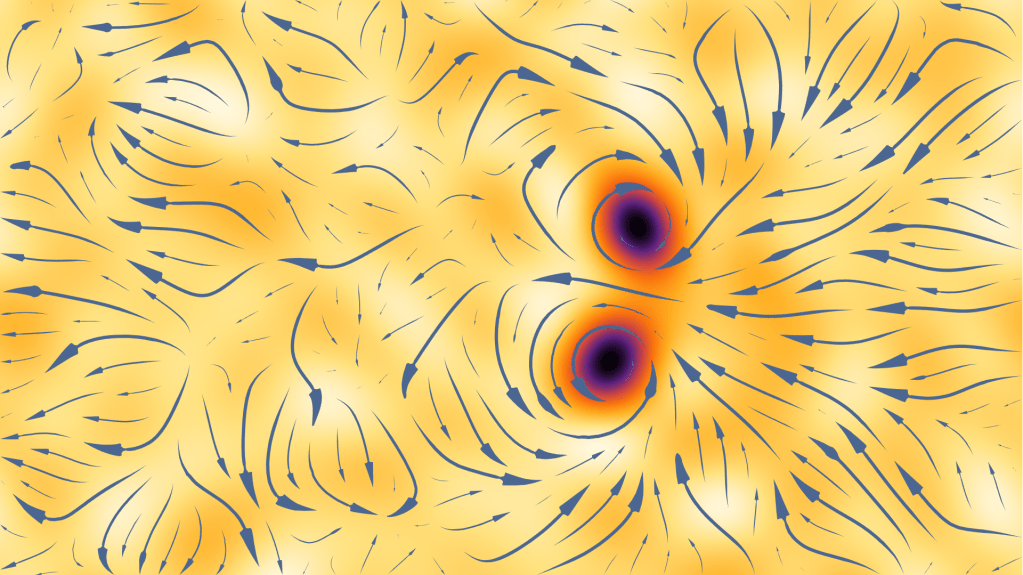
- Extending equilibrium phenomena such as superfluidity, turbulence, vortex behaviour and disorder to driven-dissipative ‘Fluids of Light’ condensates
- Phase transitions, critical phenomena and universality classes emerging in non-equilibrium systems
- Symmetry-protected topological models on lattices of spins, fermions or bosons
- Onset of quantum coherence, decoherence and entanglement growth in lattice models
- Development of Tensor Network and Monte-Carlo methods for open quantum systems
Systems we are interested in:
- Semiconductor microcavities, quantum wells and wires, exciton-polaritons
- Circuit and cavity QED systems
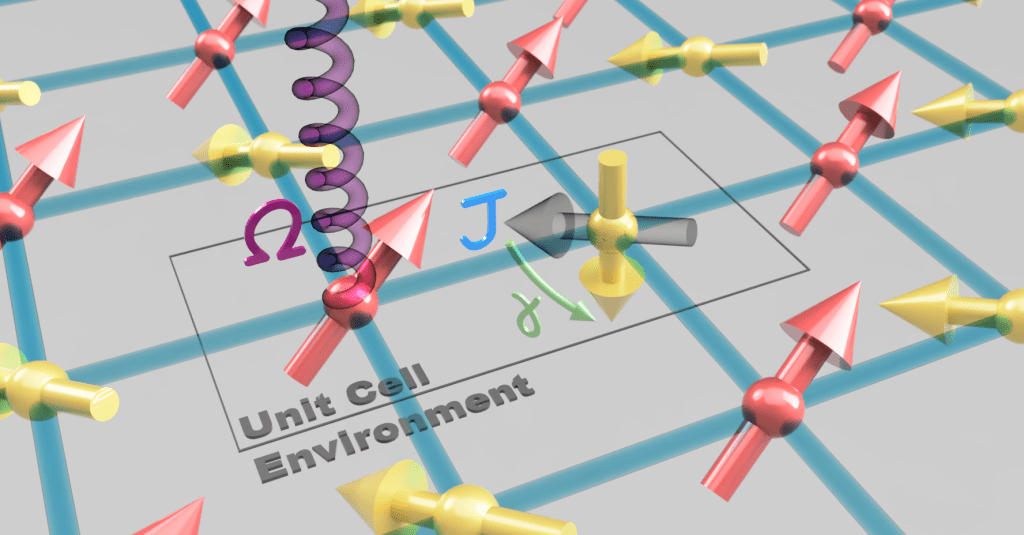
- Out-of-equilibrium and open lattice models for bosons, fermions and spins
Methods we use:
- Non-equilibrium field theory, Renormalisation Group, Green’s function methods
- Stochastic phase space methods (Truncated-Wigner Approximation, Positive-P)
- Tensor networks for open quantum systems
- Quantum optics methods (Master Equations, Quantum Jumps, Stochastic Schrödinger Equations)

 qlm-ucl.org